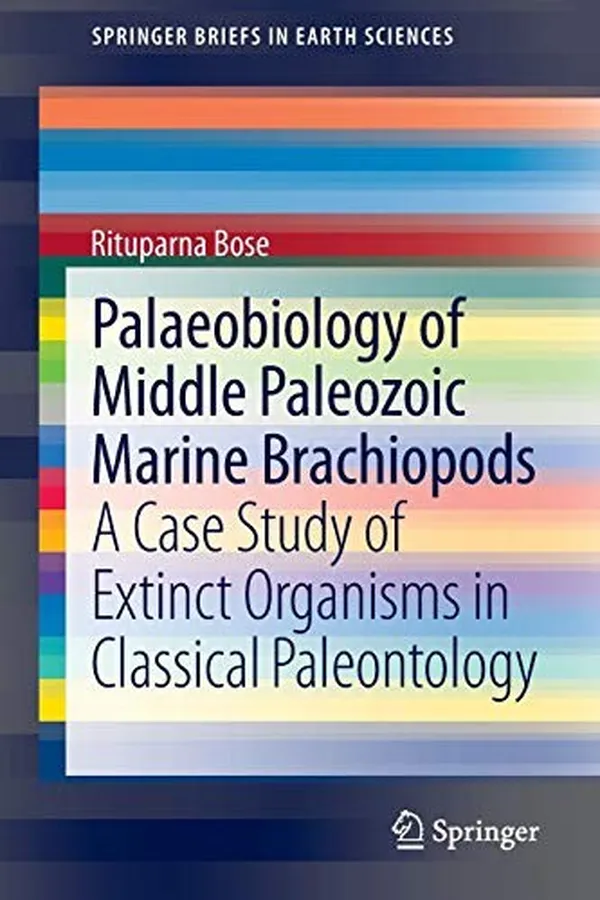
Palaeobiology of Middle Paleozoic Marine Brachiopods
by
Fossil species appear to persist morphologically unchanged for long intervals of geologic time, punctuated by short bursts of rapid change as explained by the Ecological Evolutionary Units (EEUs). Here, morphological variation in Paleozoic atrypide morphology at the subfamily level (Atrypinae …
- ● 97% match for you
- ● science & technology
the long version
Fossil species appear to persist morphologically unchanged for long intervals of geologic time, punctuated by short bursts of rapid change as explained by the Ecological Evolutionary Units (EEUs). Here, morphological variation in Paleozoic atrypide morphology at the subfamily level (Atrypinae and Variatrypinae) from the Silurian and Devonian time intervals in the third Paleozoic EEU (~444-359 my) were investigated using relatively new techniques of quantitative modeling. The study explains how a group of closely related taxa in atrypide subfamilies exhibit morphological conservation through time in P3 EEU within the Eastern North America region.
Margaret's verdict
"Fossil species appear to persist morphologically unchanged for long intervals of geologic time, punctuated by short bursts of rapid change as explained by the Ecological Evolutionary Units (EEUs). Here, morphological …"
highlights
what readers held onto
No highlights yet. Be the first.
discussion
what readers said
No reviews yet. Finish it; tell us what you found.