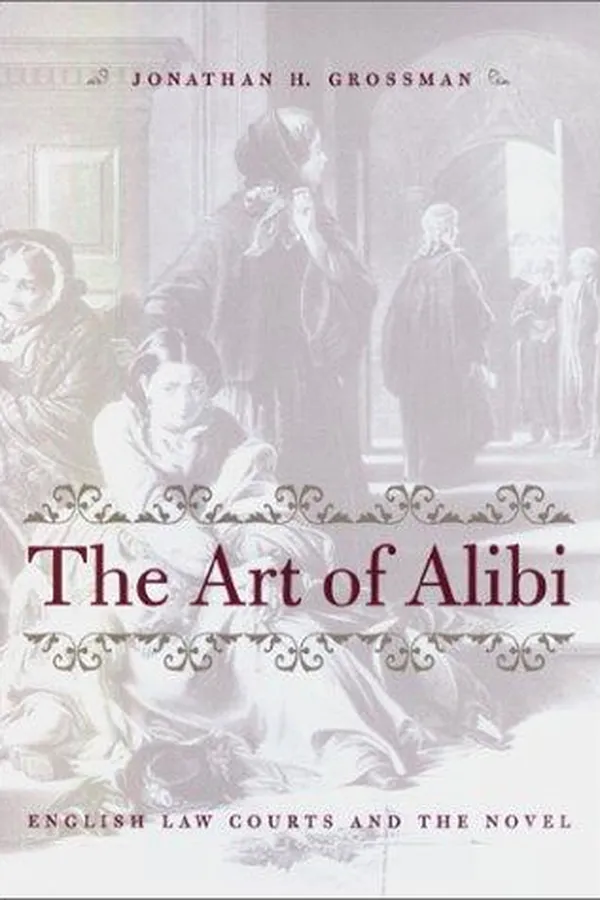
The art of alibi: English law courts and the novel
por
"In The Art of Alibi, Jonathan H. Grossman reconstructs the relation of the novel to nineteenth-century law courts. During the Romantic era, courthouses and trial scenes frequently found their way into the plots of English novels. As Grossman states, "by …
- ● 81% match for you
- ● history, literary fiction
the long version
"In The Art of Alibi, Jonathan H. Grossman reconstructs the relation of the novel to nineteenth-century law courts. During the Romantic era, courthouses and trial scenes frequently found their way into the plots of English novels. As Grossman states, "by the Victorian period, theses scenes represented a powerful intersection of narrative form with a complementary and competing structure for storytelling." He argues that the courts, newly fashioned as a site in which to orchestrate voices and reconstruct stories, arose as a cultural presence influencing the shape of the English novel.". "Weaving examinations of novels such as William Godwin's Caleb Williams, Mary Shelley's Frankenstein, and Charles Dicknens's The Pickwick Papers and Oliver Twist, along with a reading of the new Royal Courts of Justice, Grossman charts the exciting changes occurring within the novel, especially crime fiction, that preceded and led to the invention of the detective mystery in the 1840s."--BOOK JACKET.
Margaret's verdict
""In The Art of Alibi, Jonathan H. Grossman reconstructs the relation of the novel to nineteenth-century law courts. During the Romantic era, courthouses and trial scenes frequently found their way …"
highlights
what readers held onto
No highlights yet. Be the first.
discussion
what readers said
No reviews yet. Finish it; tell us what you found.


