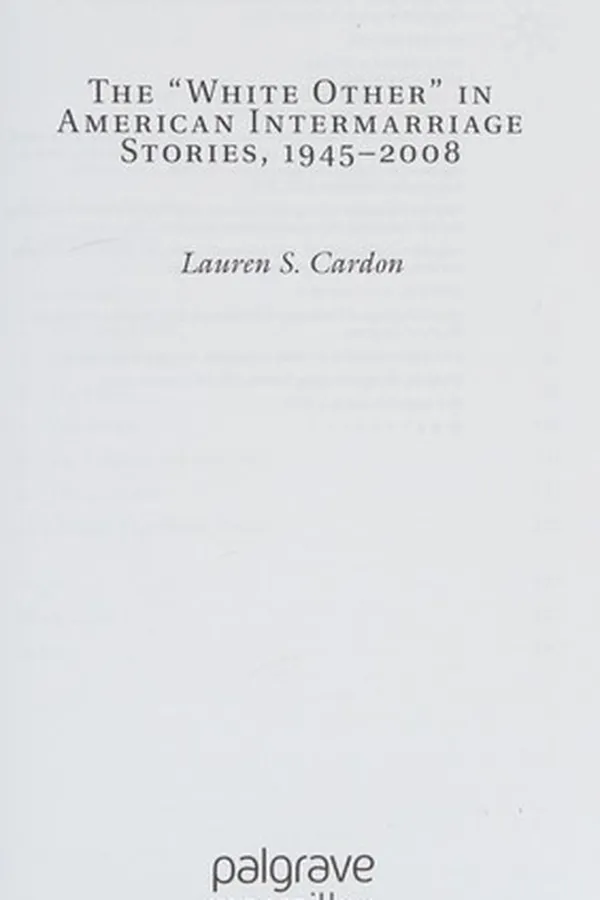
The white other in American intermarriage stories, 1945-2008
por
"Fictional depictions of intermarriage can illuminate perceptions of both 'ethnicity' and 'whiteness' at any given historical moment. Popular examples such as Lucy and Ricky in I Love Lucy (1951-1957), Joanna and John in Guess Who's Coming to Dinner (1967), Toula …
- ● 98% match for you
- ● history, literary fiction
the long version
"Fictional depictions of intermarriage can illuminate perceptions of both 'ethnicity' and 'whiteness' at any given historical moment. Popular examples such as Lucy and Ricky in I Love Lucy (1951-1957), Joanna and John in Guess Who's Coming to Dinner (1967), Toula and Ian in My Big Fat Greek Wedding (2002) helped raise questions about national identity: does 'American' mean 'white' or a blending of ethnicities? Building on previous studies by scholars of intermarriage and identity, this study is an ambitious endeavor to discern the ways in which literature and films from the 1960s through 2000s rework nineteenth- and early-twentieth-century intermarriage tropes. Unlike earlier stories, these narratives position the white partner as the 'other' and serve as useful frameworks for assessing ethnic and American identity. Lauren S. Cardon sheds new light on ethno-racial solidarity and the assimilation of different ethnicities into American dominant culture."--Publisher's website.
Margaret's verdict
""Fictional depictions of intermarriage can illuminate perceptions of both 'ethnicity' and 'whiteness' at any given historical moment. Popular examples such as Lucy and Ricky in I Love Lucy (1951-1957), Joanna …"
highlights
what readers held onto
No highlights yet. Be the first.
discussion
what readers said
No reviews yet. Finish it; tell us what you found.